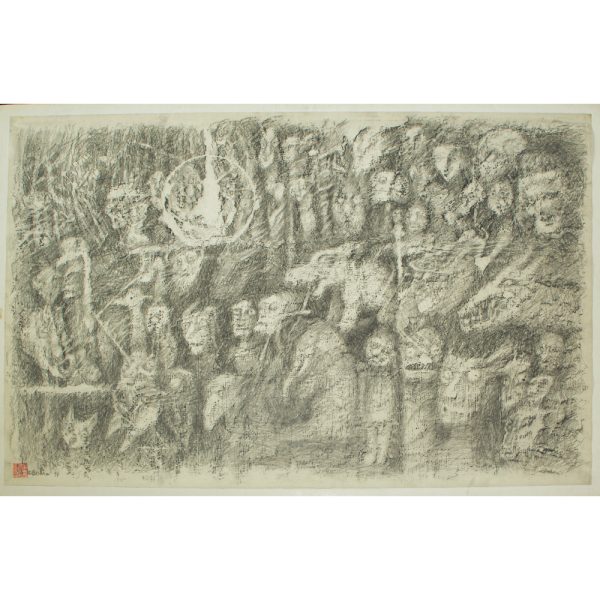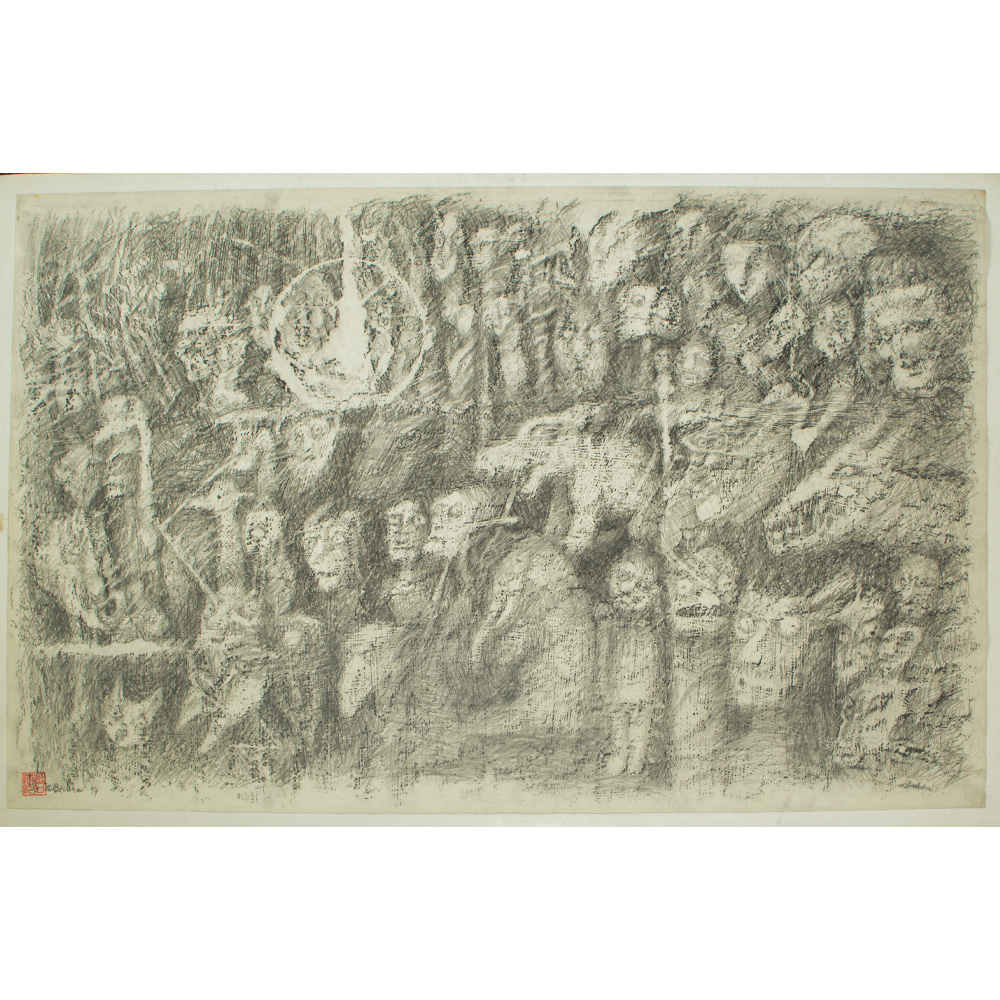
There were persons often giving birth but not raising. There were also persons suffering a miscarriage, and others living in misery
3.165,00€ (VAT included)
Art Style: Pencil lead on Silk paper
Dimensions: 65x100cm 25.6×39.4in
Reference: TB004
1 in stock
Description
Description
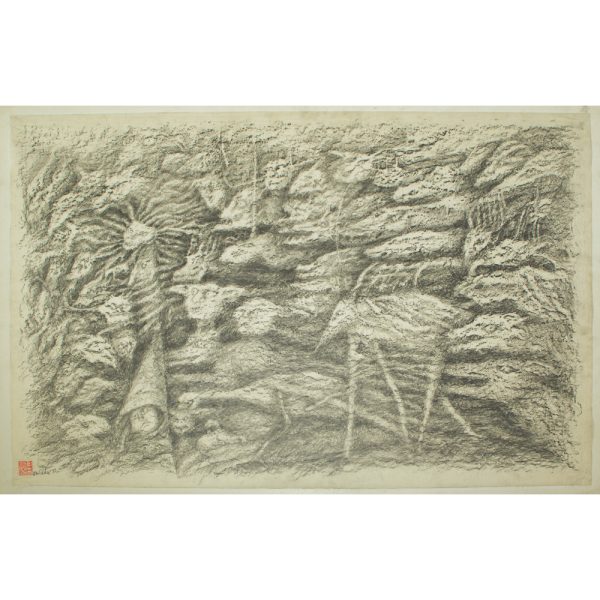
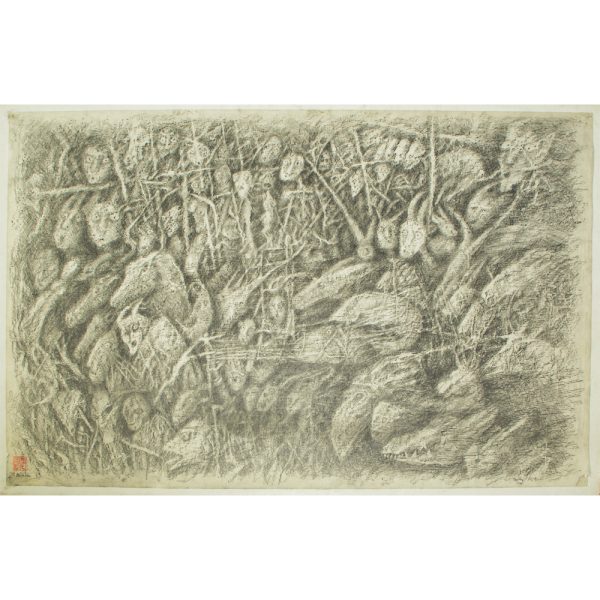
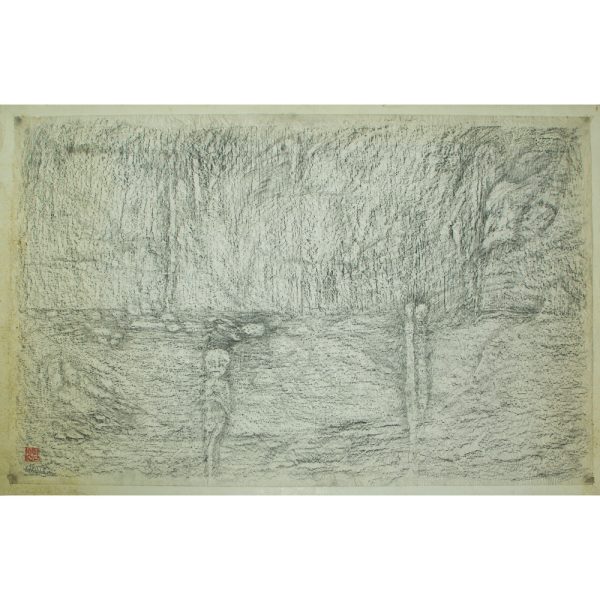
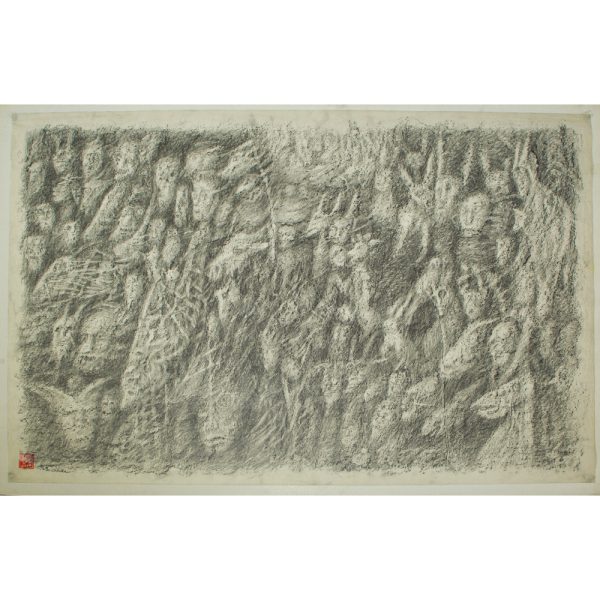
The artwork There were persons often giving birth but not raising. There were also persons suffering a miscarriage, and others living in misery. (1994) by To Bich Hai, pencil lead on silk paper, measuring 65 x 100 cm (25.6 x 39.4 inches), evokes profound themes of loss, suffering, and the fragility of existence. In this piece, the artist delves into the human experience, especially those moments where life is intertwined with tragedy—mothers who give birth but cannot raise their children, individuals who suffer miscarriages, and others trapped in a cycle of misery.
The medium of pencil on silk creates an ethereal quality, allowing the figures to appear as though they are both part of the physical world and yet dissolving into the ether. This choice of materials, coupled with To Bich Hai’s delicate and detailed hand, emphasizes the transient nature of life. The silk acts like a veil, a subtle reminder of the thin boundary between the seen and unseen, the living and the forgotten.
Inspired by the artist’s reflection on Travail sur l’empreinte (Work on the Imprint), the artwork is not only a representation of human suffering but also an exploration of the layers of existence and memory etched into the world. As Travail sur l’empreinte describes, one can see the traces left by those who came before—whether they are physical marks on stone or the emotional scars carried by the living. In this artwork, those “imprints” are the faint, ghost-like figures who appear to blend into the chaotic web of lines and textures, as if they are part of an eternal history of loss.
Just as the Travail sur l’empreinte text reflects on how time and experience leave their marks on stone, To Bich Hai’s piece shows how suffering leaves its mark on the human soul. The figures in the artwork are drawn with intricate lines that mimic the wear and erosion of stone, but here, it is the human condition that is eroded by time and tragedy. These are not simply abstract forms, but the imprints of real lives—mothers, children, and the suffering they endured. The figures blur into one another, reinforcing the idea that this suffering is collective, part of the larger fabric of humanity.
The viewer is invited to contemplate the depth of these hidden stories, to look beyond the surface, and to recognize the invisible yet persistent presence of those who have suffered and endured. In this sense, To Bich Hai’s artwork becomes a mirror, much like the stone described in Travail sur l’empreinte, reflecting not just the marks left behind, but the unseen, spiritual essence of those lives.
In conclusion, There were persons often giving birth but not raising… is a deeply meditative piece that asks us to reflect on the imprints left by human suffering—how it weaves itself into the fabric of existence and how, through art, those forgotten voices can still whisper to us through the ages.
“Work on the imprint (since 1989)
Look at the wall of a building, or the stones that support churches and cathedrals. If out of curiosity, one lingers there, and takes the time to observe, one notices, from this well-squared stone, the tool marks of a worker from a bygone era.
Conscientious of his work, from a raw stone, he offers us a flat surface, a mirror ready to receive.
Over time, centuries, other passersby leave their mark, their scratches. Some whisper their secret loves to the stone, Others shout their passion and despair or, slash the stone with knife strokes to express their anger. Some people wander through arabesques,, just to leave a moment of their life there.
But beyond these traces of soul, what lies behind this face full of scratches? What is the original imprint, since the dawn of time, since the creation of its matter? Who inhabited or still inhabits it?
To capture its imprint, and try to listen and see, one can apply a veil of tissue paper on this stone, and have it embraced through rubbings, as if it were skin.
And if one manages to forget oneself, to surrender, and become the stone, it reveals gradually itself, revealing a weave.
From this weaving of signs, of traces, elaborated over millions of years, it is up to each one to guess, to seek the key, to find the thread that will lead them to the end of the mirror, to the other side of the shore, in order to embroider their own hidden world there.“
More artworks by Tô Bich Hai
-
Over there were those planning troop dispositions, rushing themselves to occupy the king’s seals, making an extremely violent fight
Tô Bich Hai
3.165,00€ (VAT included)65x100cm
-
There were people falling down to the sea. Ones killed by wild wolves’ canines of elephant’s ivory
Tô Bich Hai
3.165,00€ (VAT included)65x100cm
-
There were souls seeking help in the God temple and the Buddhist pagoda, or at the entrance to the market or at the end of the river
Tô Bich Hai
3.165,00€ (VAT included)65x100cm