There were people falling down to the sea. Ones killed by wild wolves’ canines of elephant’s ivory
3.165,00€ (VAT included)
Art Style: Pencil lead on Silk paper
Dimensions: 65x100cm 25.6×39.4in
Reference: TB005
1 in stock
Description
Description
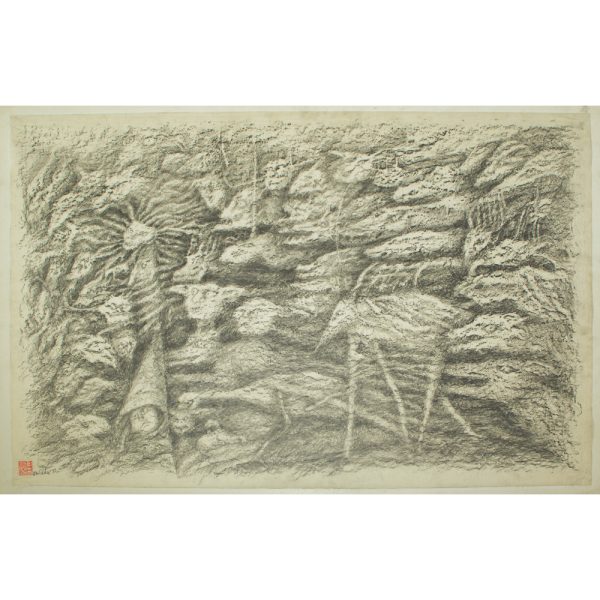
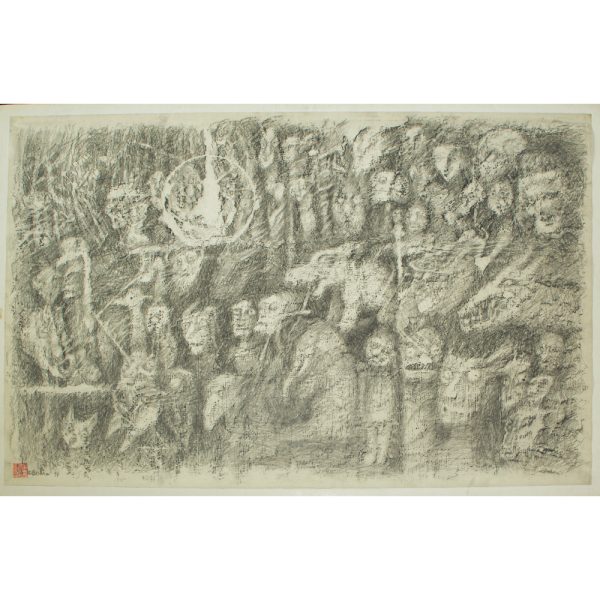
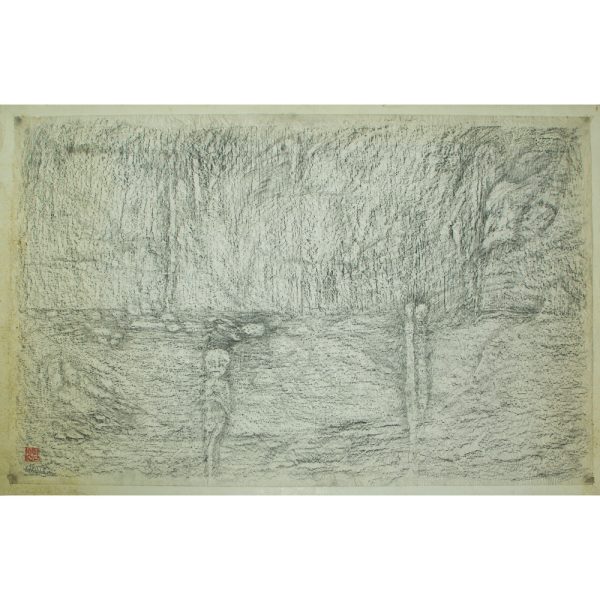
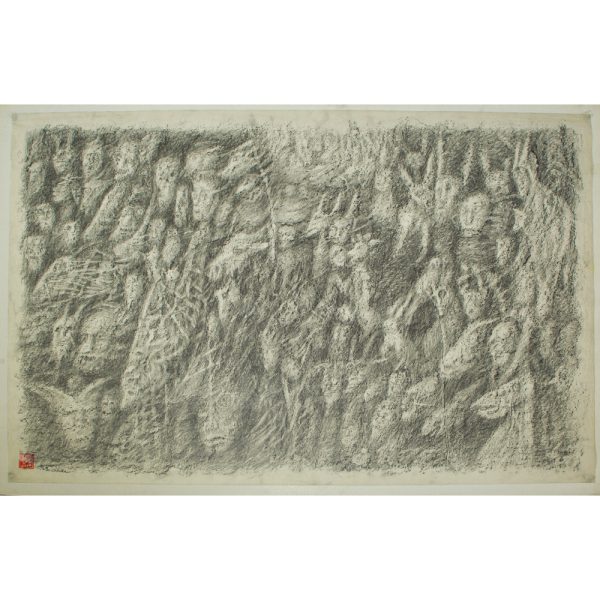
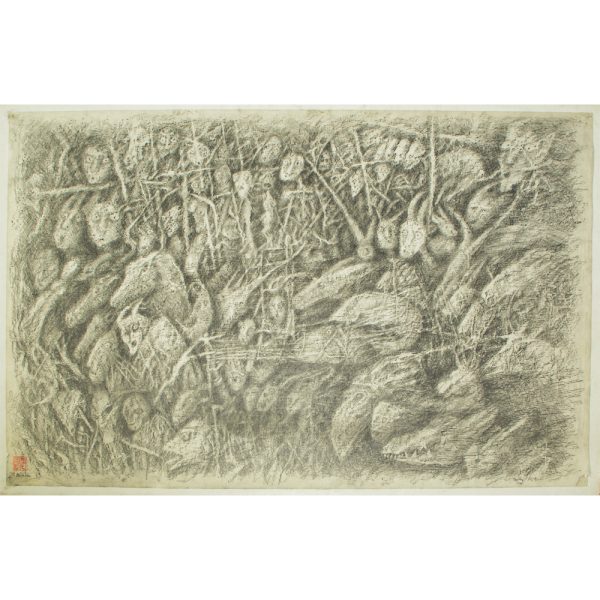
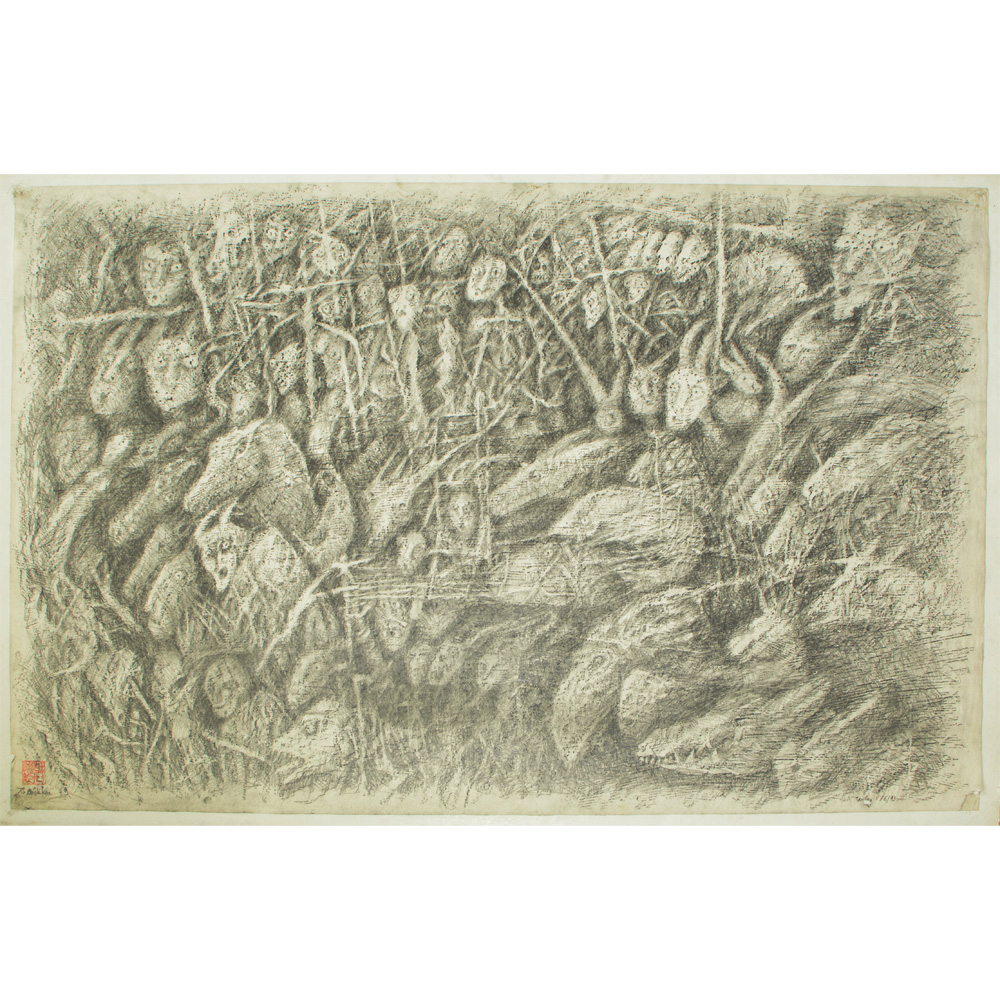
This artwork by To Bich Hai titled “There were people falling down to the sea. Ones killed by wild wolves’ canines of elephant’s ivory” (1993), created with pencil lead on silk paper, presents a powerful exploration of human struggle, nature’s wrath, and the marks left on history. The composition is dense, with abstract figures and forms that seem to merge into each other, conveying chaos and despair, echoing the violent interactions between people and nature. The delicate lines of the drawing resemble traces, scratches, and imprints, which align closely with the theme of Travail sur l’empreinte (Work on the Imprint).
The figures appear entangled in a stormy environment, hinting at the duality of human fragility and the raw forces of nature. The wild wolves and the ivory tusks, symbols of brutality and the primal instincts of survival, evoke an image of humans being overwhelmed by forces beyond their control, whether from nature or their own doing. The artwork feels like a moment captured from the very fabric of time, where history’s imprint is left on the paper much like the marks left on the stones of ancient cathedrals.
As described in the Travail sur l’empreinte, just as the stone of a cathedral bears the wear of centuries of human touch, each mark in this drawing seems to tell a story — whether it is the story of pain, love, or survival. The layered textures of the pencil on the silk paper evoke a sense of timelessness, as if the viewer is peering through the veil of time to witness past lives, forgotten moments, and untold sufferings.
The silk paper acts like a delicate skin, capturing every trace, every history, much like the imprints left by tools on stone. In this way, To Bich Hai’s work goes beyond the visual and touches on the philosophical, asking us to consider what remains hidden beneath the surface of existence, and what stories we leave behind for those who come after us.
This piece asks the viewer to contemplate the impact of every moment — whether it is the fall of a person into the sea, the attack of wild animals, or the invisible forces of history shaping humanity. Each line in the artwork becomes part of a larger narrative, much like the ancient marks on the walls of sacred buildings, reminding us of the fleeting but enduring nature of life.
“Work on the imprint (since 1989)
Look at the wall of a building, or the stones that support churches and cathedrals. If out of curiosity, one lingers there, and takes the time to observe, one notices, from this well-squared stone, the tool marks of a worker from a bygone era.
Conscientious of his work, from a raw stone, he offers us a flat surface, a mirror ready to receive.
Over time, centuries, other passersby leave their mark, their scratches. Some whisper their secret loves to the stone, Others shout their passion and despair or, slash the stone with knife strokes to express their anger. Some people wander through arabesques,, just to leave a moment of their life there.
But beyond these traces of soul, what lies behind this face full of scratches? What is the original imprint, since the dawn of time, since the creation of its matter? Who inhabited or still inhabits it?
To capture its imprint, and try to listen and see, one can apply a veil of tissue paper on this stone, and have it embraced through rubbings, as if it were skin.
And if one manages to forget oneself, to surrender, and become the stone, it reveals gradually itself, revealing a weave.
From this weaving of signs, of traces, elaborated over millions of years, it is up to each one to guess, to seek the key, to find the thread that will lead them to the end of the mirror, to the other side of the shore, in order to embroider their own hidden world there.“
More artworks by Tô Bich Hai
-
Over there were those planning troop dispositions, rushing themselves to occupy the king’s seals, making an extremely violent fight
Tô Bich Hai
3.165,00€ (VAT included)65x100cm
-
There were persons often giving birth but not raising. There were also persons suffering a miscarriage, and others living in misery
Tô Bich Hai
3.165,00€ (VAT included)65x100cm
-
There were souls seeking help in the God temple and the Buddhist pagoda, or at the entrance to the market or at the end of the river
Tô Bich Hai
3.165,00€ (VAT included)65x100cm