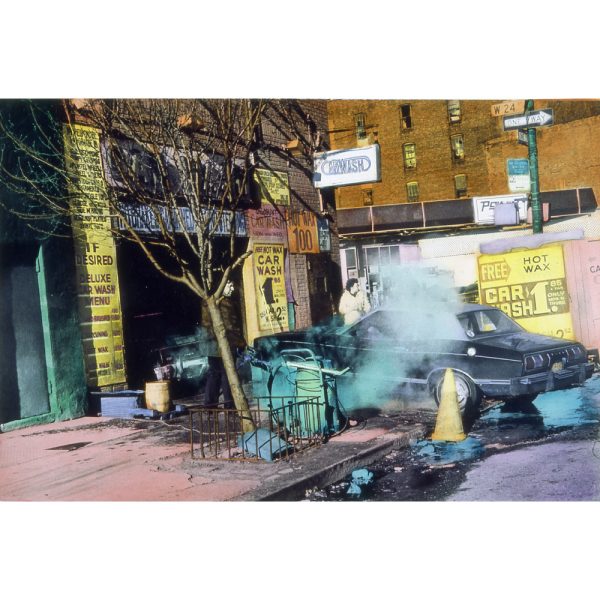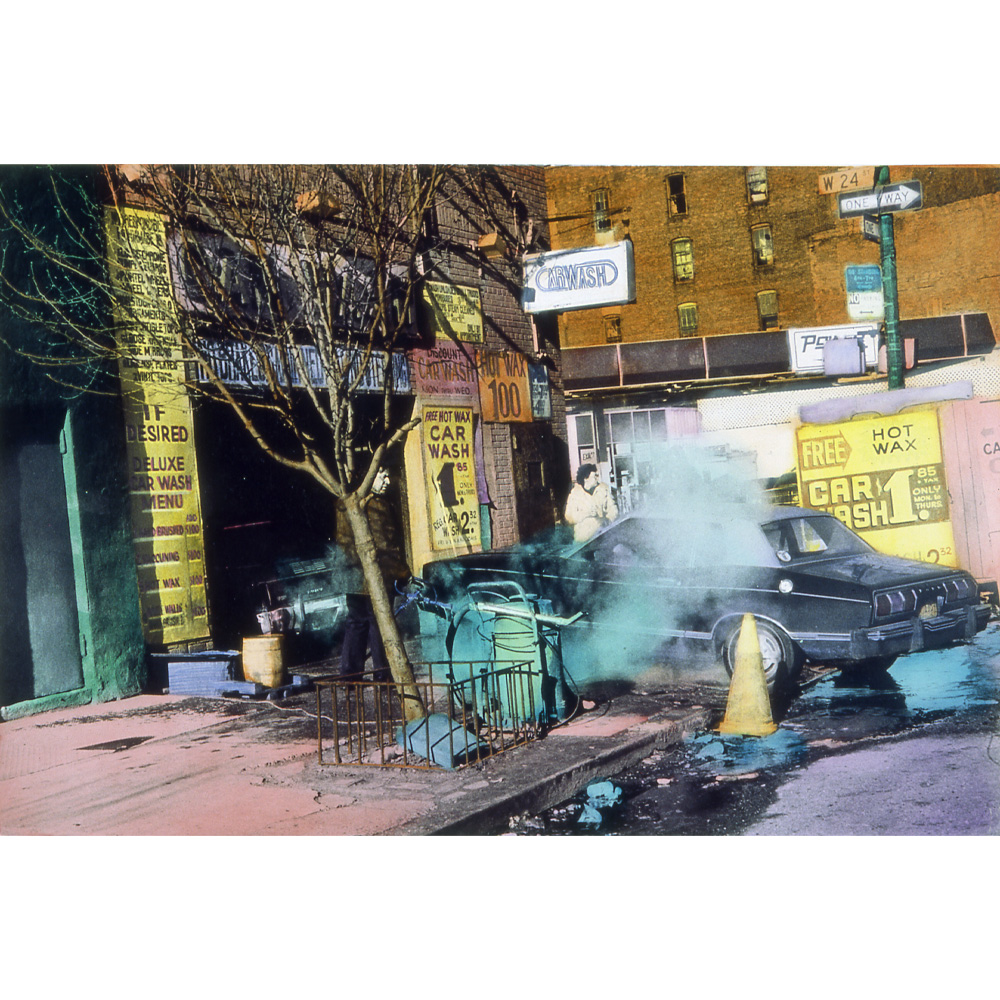
Car Wash Menu, New-york (1980)
4.900,00€ (VAT included)
Medium: Tirage argentique rehausse couleurs / Silver gelatin Hand-coloured
Dimensions: 40x50cm, 15,7×19,7in
Edition: Piece unique edition varies 3/5 / Unique piece varied edition 3/5
Reference: EL004
Description
Description
This artwork, titled Car Wash Menu, New York (1980), is a hand-colored silver gelatin photograph by Elizabeth Lennard. Measuring 15.7 by 19.7 inches, this piece is part of a unique, varied edition (3/5), blending documentary street photography with vibrant, hand-applied color to capture an urban moment in 1980s New York.
The image centers on a chaotic yet captivating street scene, where a car is being washed at an old-fashioned, gritty car wash. A plethora of colorful signs dominates the composition, advertising various services such as “Hot Wax 100” and “Free Hot Wax Car Wash,” in bold, weathered text. The signs, with their worn edges and neon hues, reflect the hustle and vibrant energy of the city’s street culture during this era.
At the core of the scene, a worker, partially obscured by yellow mist or steam from the car wash, is engaged with the task of washing a dark-colored car. The yellow mist spills over the scene, adding a surreal, almost toxic effect to the gritty surroundings. The vibrant use of hand-applied color transforms the photograph, infusing it with an almost hyper-real, pop-art-like quality. The signage and objects, like a bright pink traffic cone and a teal water cart, are bathed in unnatural colors, contributing to the surreal atmosphere.
The urban decay is evident in the cracked sidewalks, litter, and grimy puddles, creating a stark contrast with the electric colors Lennard applies to this everyday moment. The juxtaposition of the mundane task of a car wash with the striking, almost psychedelic use of color gives the scene a vibrant yet gritty character, reflecting the raw energy of New York streets during this period.
The hand-coloring technique applied to the silver gelatin photograph allows the viewer to experience this urban environment through a new lens—one that heightens both the chaos and the beauty of everyday life. The result is a piece that captures a fleeting moment in time while also transforming it into an iconic snapshot of a vibrant, bustling city. Lennard’s ability to blend photography with artistic embellishment makes this work both a documentary and an imaginative exploration of urban life.
More artworks by Elizabeth Lennard
-
-
-
-
-
-
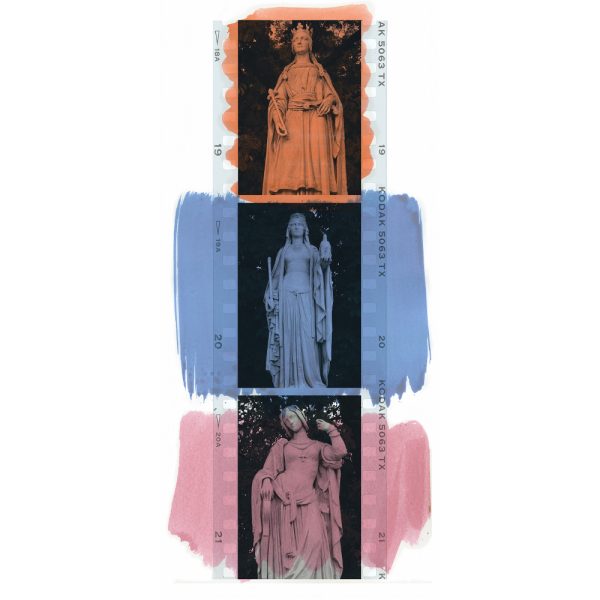
Jardin du Luxembourg, triptyque des reines (2019)
Elizabeth Lennard
1.950,00€ (VAT included)70x33cm
-
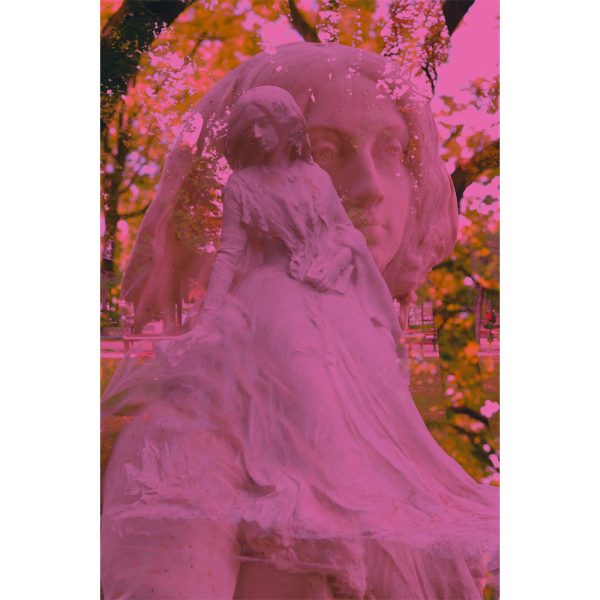
George Sand , double exposition, Jardin du Luxembourg (2019)
Elizabeth Lennard
1.950,00€ (VAT included)70x47cm
-