
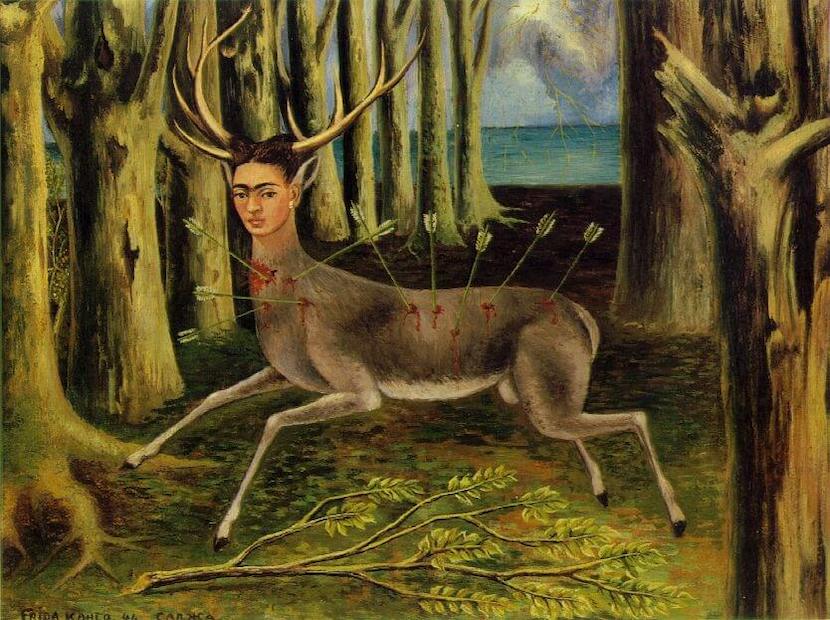
Few figures in modern art have transcended the boundaries of canvas and time quite like Frida Kahlo. Painter, poet of pain, and symbol of resilience, Frida’s life and art remain a testament to the strength of the human spirit. Her story is one of contradictions: beauty and tragedy, vulnerability and defiance, love and solitude. Yet it is precisely through these contradictions that she created a visual language entirely her own.
At MAG The Women Gallery, we illuminate the life, art, and enduring legacy of Frida Kahlo.
A Life Shaped by Pain and Passion
Born as Magdalena Carmen Frida Kahlo y Calderón in Coyoacán, Mexico, in 1907, Frida’s early years already foreshadowed the challenges and fire that would define her life. At six years old, she contracted polio, which left her with a weakened leg and a lifelong limp. But it was the near-fatal bus accident at age eighteen which fractured her spine, pelvis, and ribs that altered the course of her destiny forever.
Bedridden for months, Frida began painting as a means of escape and self-reconstruction. Her mother fixed a mirror above her bed so she could paint herself. That mirror became both her companion and her muse. “I paint myself,” she later said, “because I am so often alone, and because I am the subject I know best.”
The Mirror as a portal
Frida’s self-portraits, over a third of her total works, were never mere likenesses. They were psychological landscapes, where pain took form as surreal symbolism.
She painted her fractured body with raw honesty: nails piercing her skin, tears of glass, roots growing through her flesh. Yet her work was never purely autobiographical; it was myth-making, an attempt to translate her suffering into something sacred and transformative.
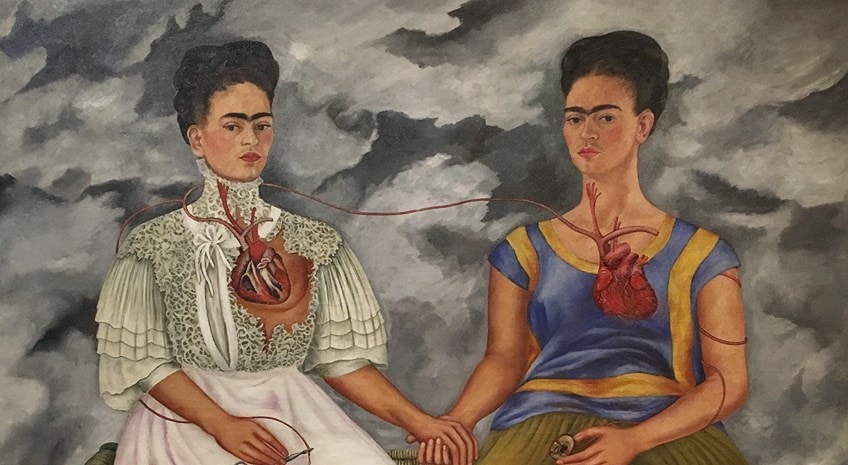
In The Two Fridas (1939), she portrays two versions of herself : one dressed in traditional Tehuana attire, the other in European clothing, holding hands as blood flows between their hearts. It’s a haunting dialogue between her dual identities: the Mexican and the modern, the beloved and the broken.
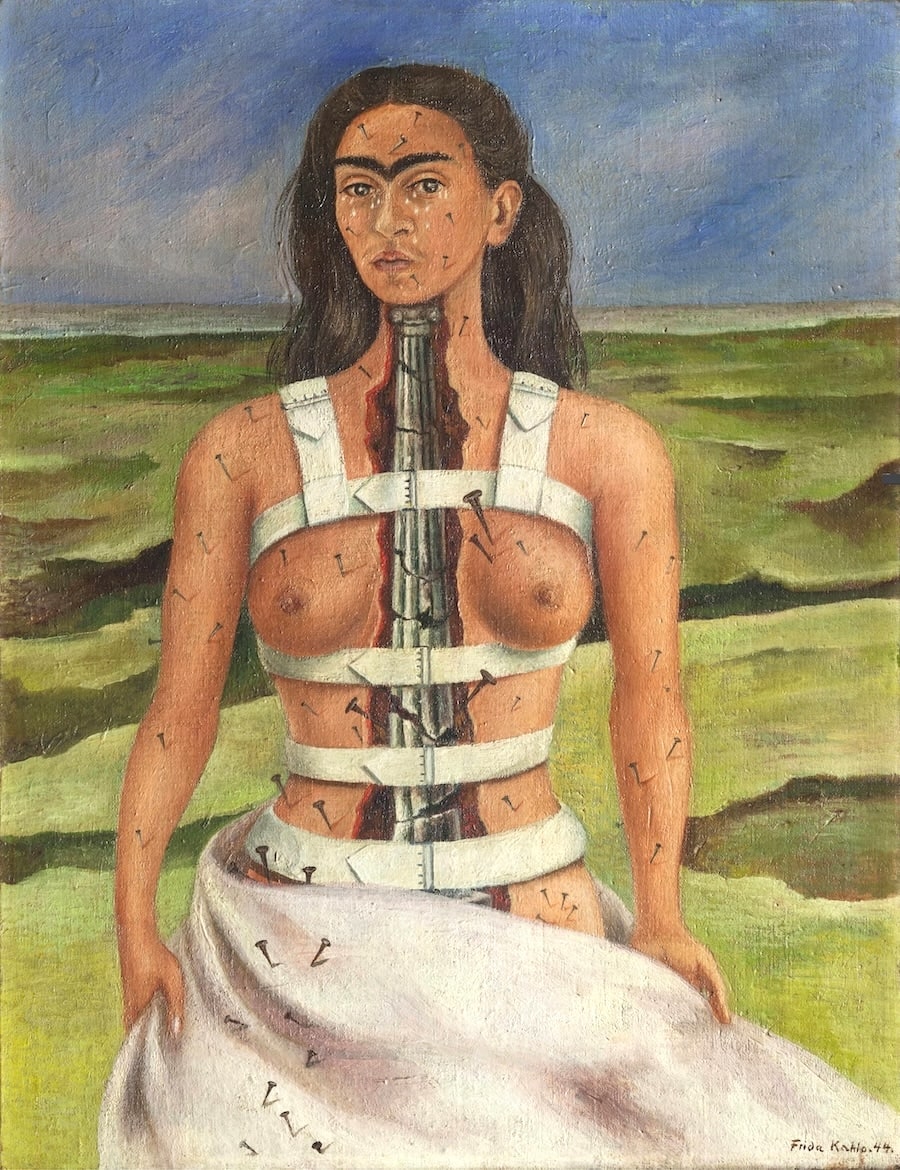
The Broken Column (1944)
In The Broken Column (1944), her spine becomes a shattered Ionic column, her face streaked with tears but her gaze unflinching. Through such images, Frida revealed the resilience of a woman who refused to be defined by her wounds.
Love, politics and Art:
Frida’s marriage to Diego Rivera, Mexico’s celebrated muralist, was both her greatest inspiration and her greatest torment. They shared an intense, unconventional relationship marked by mutual admiration, infidelities, and political commitment. Together they moved through the vibrant intellectual circles of post-revolutionary Mexico, surrounded by poets, activists, and surrealists.
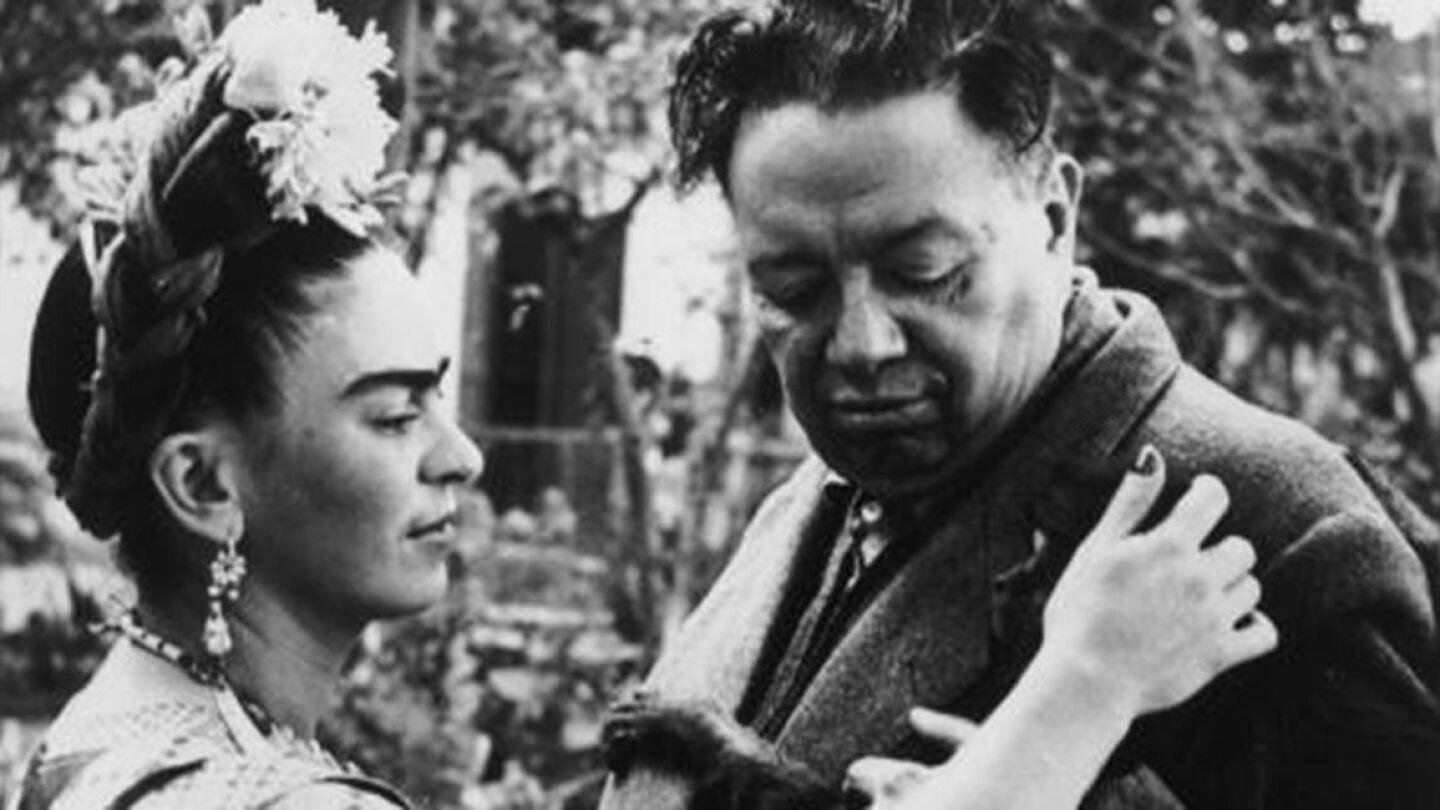
Despite often being overshadowed by Rivera’s fame during her lifetime, Frida’s art defied categorization. While many tried to label her as a surrealist, she rejected the term: “They thought I was a Surrealist,” she said, “but I wasn’t. I never painted dreams. I painted my own reality.”
Her reality was deeply tied to her identity as a Mexican woman. Through her bold use of color, indigenous motifs, and symbolic imagery monkeys, skulls, roots, and flowers Frida celebrated her culture and redefined the representation of womanhood in art. She made the personal political, long before it became a feminist rallying cry.
Frida as a Feminist Icon
Decades after her death in 1954, Frida Kahlo’s influence continues to grow. She has become a global icon of feminism, resilience, and self-expression.
Her image, the braided hair, the unibrow, the floral crowns has become instantly recognizable, sometimes even commercialized. But beyond the pop icon lies a woman who dared to live and love with brutal honesty.
Frida’s art gave visibility to the female body in pain, to the complexity of identity, to the power of vulnerability. She painted miscarriage, heartbreak, and disability, subjects often silenced in her time and transformed them into symbols of strength.
She reminded the world that beauty can coexist with suffering, and that the self, however fractured, can still radiate power.
The Legacy Lives On
Today, Frida Kahlo’s former home, La Casa Azul,stands as a museum in her honor; a vibrant sanctuary filled with her paintings, diaries, and the objects of her daily life.
Visitors from around the world come to stand before her canvases and feel that electric intimacy she left behind.
Frida’s legacy extends far beyond art history. She continues to inspire new generations of women to embrace their imperfections, to turn pain into creation, and to live unapologetically. Her story reminds us that authenticity is revolutionary, and that through art, we can rebuild ourselves, again and again.
“I never paint dreams or nightmares”, she once wrote. “I paint my own reality.”
And in doing so, Frida Kahlo changed the way we see ourselves and the way the world sees women.
At MAG The Women Gallery, we highlight these trailblazing artists who have shaped the course of art with their groundbreaking contributions.
Stay tuned to our blog and discover more fascinating stories of women artists who are often overlooked.
Sources:
Frida Kahlo – Maria Hesse (Autobiography)
7 cosas que no sabíamos sobre Frida Kahlo – https://www.bbc.com/mundo/articles/cgerxrzrzkyo
Phoenix Art Museum: Frida Kahlo – https://phxart.org/es/artists/frida-kahlo/