
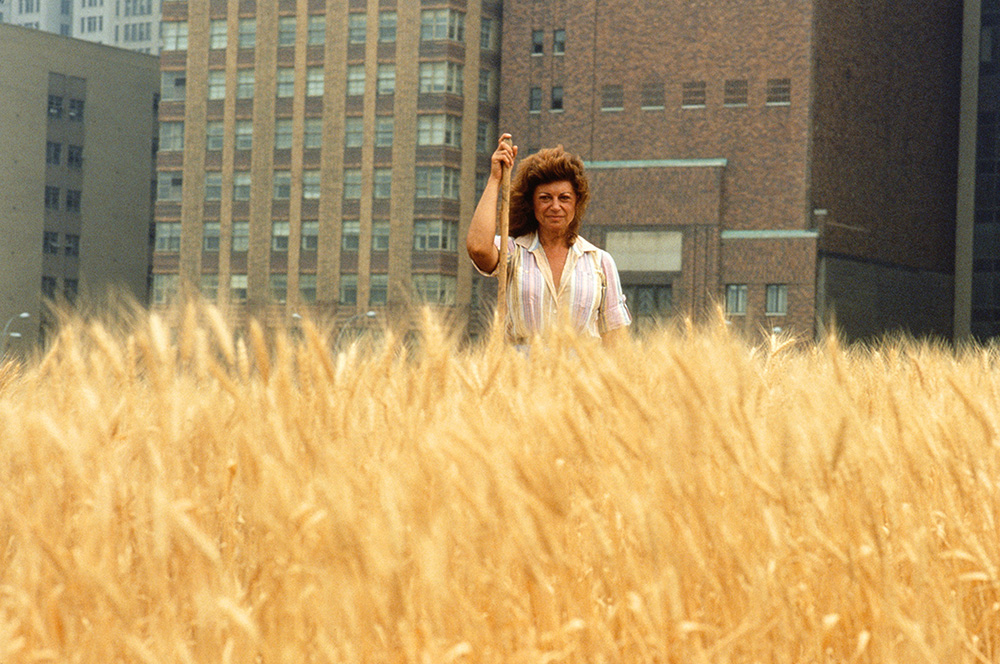
Agnes Denes is a visionary conceptual artist celebrated for her profound exploration of environmental, social, and philosophical themes. Best known for her iconic work Wheatfield – A Confrontation (1982), Denes has been a pioneering force in land art, consistently pushing the boundaries of contemporary art and inspiring future generations. At MAG The Women Gallery, we invite you to delve deeper into her remarkable journey and explore the powerful impact of her groundbreaking artworks.
Who is Agnes Denes?
Agnes Denes is a renowned conceptual artist born in Budapest around 1931 and later based in New York. She is acclaimed for her innovative contributions to land art, drawing and philosophical writing.
Throughout her career, Denes has continuously pushed the boundaries of contemporary art, delving into issues related to the environment, society and philosophy. Her work has left a long-lasting impact on the art world, inspiring generations of artists and thinkers.
Wheatfield – A Confrontation (1982) as one of the most powerful and breathtaking works of the Land Art movement
Land Art is recognized as a movement within contemporary art where nature plays the main role, both as a material and as part of the landscape of artworks. Environmentalism and the criticism of capitalist excesses are the core values that drive this movement, which lives at the intersection of architecture, landscapes, and sculpture.
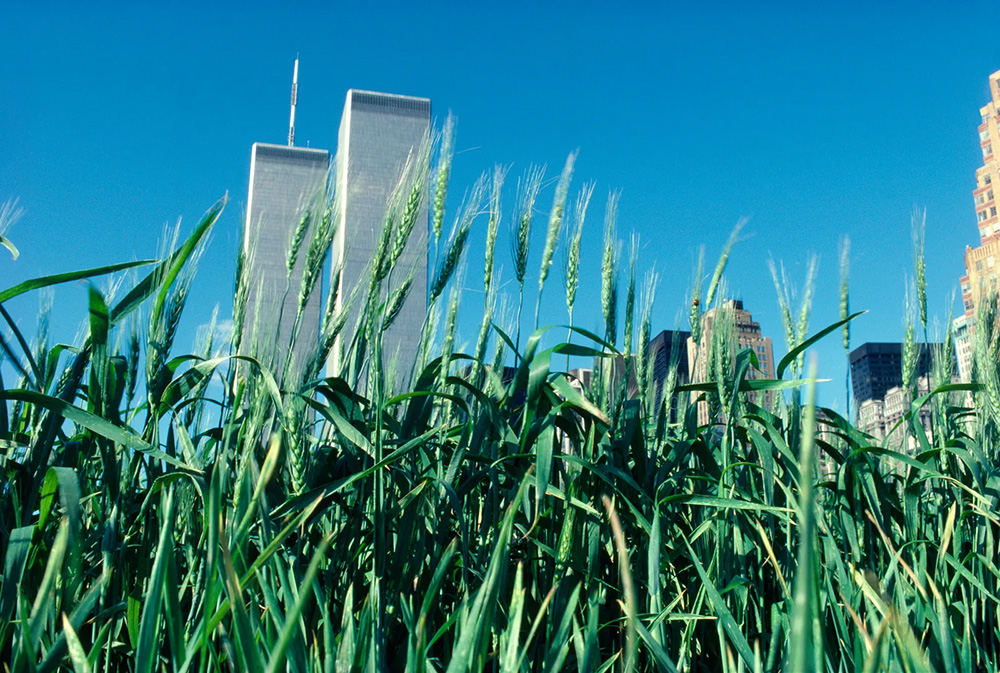
It was 1982 and Agnes Denes only needed wheat seeds to bring a rural touch to the heart of the Big Apple. Suddenly, Manhattan’s towering skyscrapers towered over fields of golden stalks, creating a striking contrast between nature and cityscape.
This made a city of more than 17 million people face the sharp contrast between rural life and urban existence, and reflect on the differences between peace and chaos, nature and urbanization.
For Agnes Denes, it served as a fearless critique of the class division and how we often misunderstand the concept of progress. Most of her work centers around the creation of contradictions, prompting the spectator to reflect on the paradoxes often assumed without questioning them.
After Wheatfield season …It was harvest time
During that summer, New York was turned into a wheat field, then returned to its hustling, crowded reality. The project ended with the harvesting of a thousand seeds, which were symbolically planted in twelve cities around the world.
Clearly, a work so deeply embedded in social and ecological awareness would not waste any of its resources. The leftover hay was donated to the horses of the New York Police Department, while the harvested grain became part of a traveling exhibition entitled The International Art Show for the End of World Hunger, organized by the Minnesota Museum of Art.
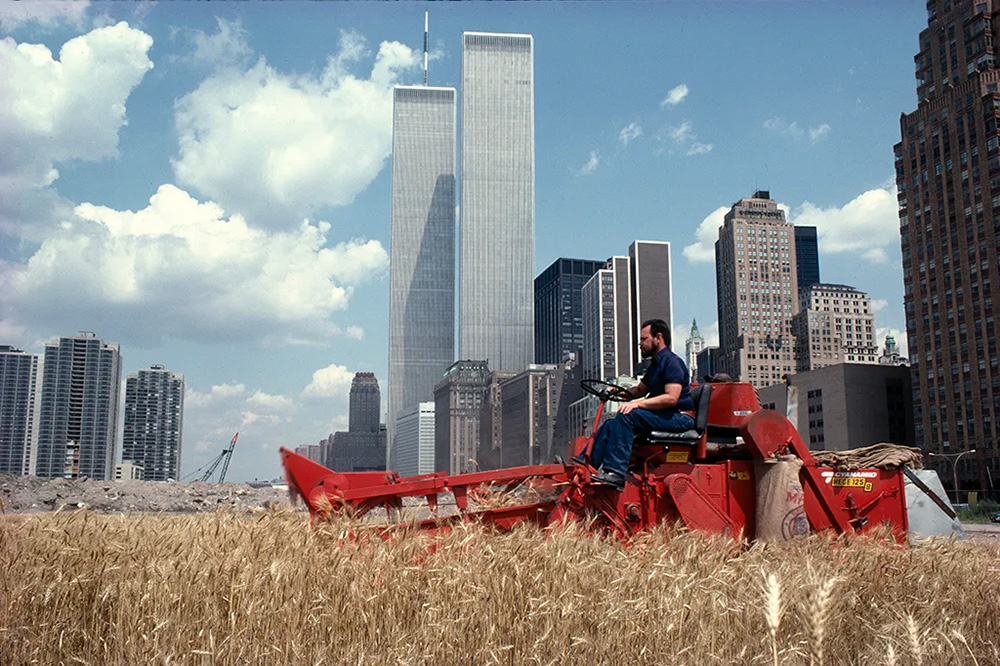
After the harvest, Battery Park was built on the same site, where the artist buried a time capsule that would be opened in the 30th century. This act closed the cycle, transforming the project into a silent but powerful critique of the prevailing economic system.
The New York wheat field has been interpreted as a universal symbol, addressing themes from food and ecology to resource depletion. Now, four decades later, it appears to be a remarkably prescient work, offering a critique that foreshadowed the global food crisis we are currently facing.
At MAG The Women Gallery, we are deeply committed to our mission: to showcase the works of women artists, who too often remain overlooked in today’s art world. We focus on these pioneering figures whose contributions have shaped the course of art history.
Sources: